
Terrafarmer is working with Southern Water to understand nitrogen loss and improve nutrient management in the South Downs National Park
With ever-increasing pressure on farm inputs and concern about their ultimate destination in the environment, Southern Water asked us to investigate and understand nitrogen loss over the chalk aquifers of the South Downs National Park–and identify practical ways for local farmers to improve nutrient management.
Impact on drinking water
It is widely acknowledged that nitrogen (N) can have a very specific impact on drinking water supplies. Nitrate nitrogen is a very mobile element and any excess left in the soil at the start of autumn/winter can easily be moved through the soil profile away from growing roots and into watercourses or groundwater. Legal maximum N loading in drinking water means water companies are required to scrub N out of drinking water to maintain the safety and quality of drinking water supplies. This is a costly process so any understanding that may reduce this risk is important to water companies.
Soil scanning
Terrafarmer was asked to scan and soil sample a range of fields on five farms in the Winchester Downs Cluster in the South Downs National Park. We scanned the fields using electrical conductivity and electromagnetism to establish variation in soil type across the area. Based on those scans, we were able to choose suitable locations to take GPS-located soil samples.
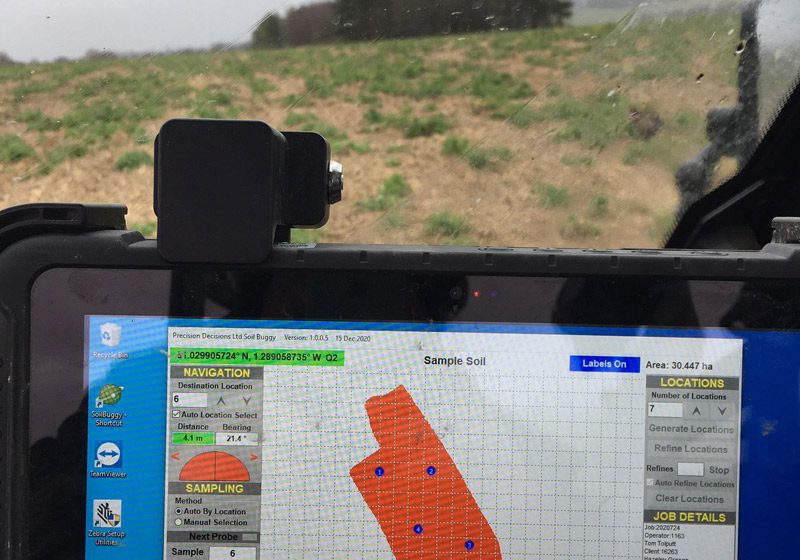
Soil scanning for Southern Water on the South Downs National Park
Soil samples
We then took soil samples at two depths, 0-15cm and 15-30cm. These were then analysed for the usual suite of nutrients plus nitrate, ammonium, and total nitrogen. The aim will be to see if we can track the movement of N through the soil profile, and how scanning soil variation may influence N applications and N use efficiency in the longer term.
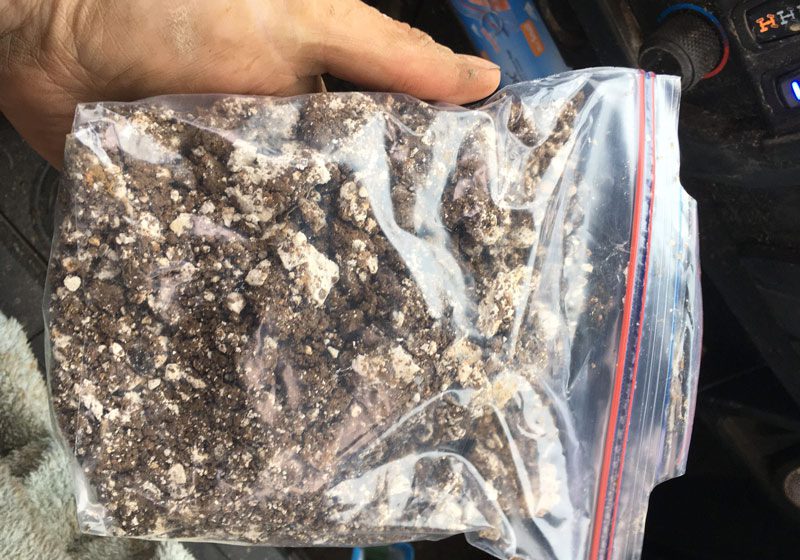
Soil sample for Southern Water taken on the South Downs National Park
We’ll keep you posted on the results, but this could be a fascinating and potentially important project for those farming in vulnerable water catchment areas in the country and, with skyrocketing fertiliser prices, farmers more generally.

About the author
After gaining an HND in Agriculture, Tom Tolputt went on to work as an Area Manager and Farm Animal Nutritionist for Agri-King for seven years. Setting out his stall as an independent consultant, he began advising a range of organic and conventional farm businesses across the UK. He also runs the family farm, raising organic beef cattle and organic cereals at Lesquite Organics with his wife, Nic, near Looe in Cornwall.


